
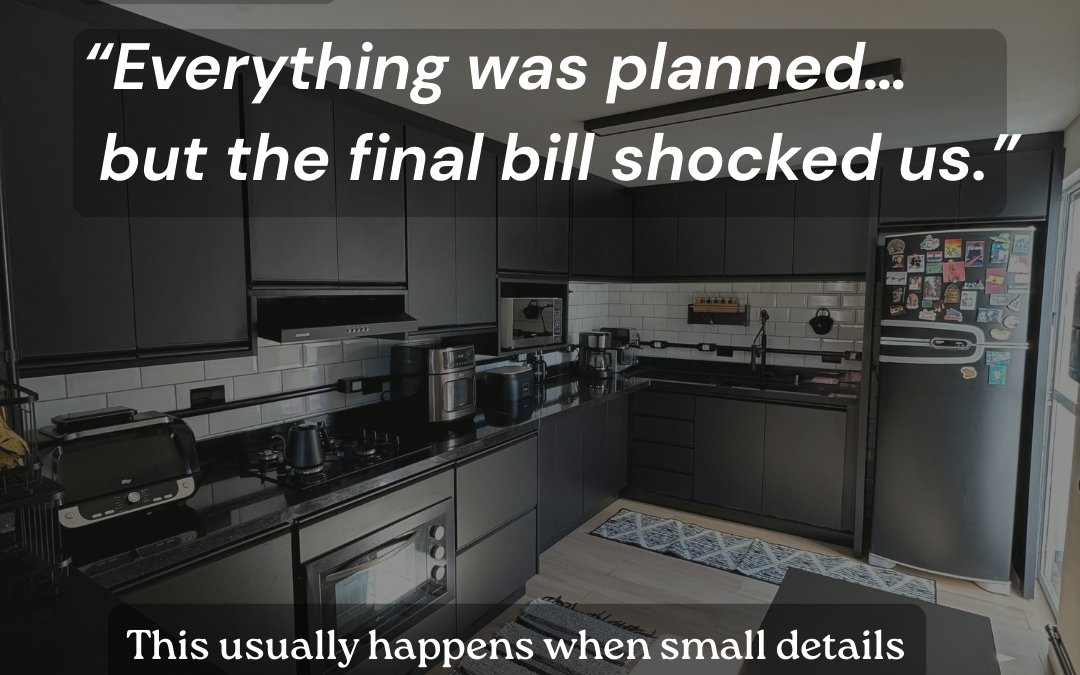
Planning a home interior is exciting, but small errors can silently increase your expenses. Many homeowners face budget overruns not because interiors are expensive, but because of common interior design mistakes made during planning and execution.
One of the biggest mistakes is starting work without a detailed cost plan. When material specifications, finishes, and quantities are not clearly defined, additional items keep getting added later. This often leads to unexpected expenses that could have been avoided with proper planning. Clear documentation helps maintain control over your interior design cost from the beginning.
Another frequent issue is making design changes during execution. Even minor alterations at the site require rework, additional labor, and material wastage. These changes not only delay the project but also increase the overall budget. Finalizing layouts and designs early plays a major role in budget interior planning.
Choosing materials based only on appearance is another costly mistake. Low-quality materials may look good initially but tend to wear out faster. Over time, repairs and replacements increase maintenance expenses. Selecting durable materials ensures long-term value and helps avoid unnecessary costs related to home interior planning.
Lastly, ignoring professional guidance can also impact your budget. Experienced designers help balance aesthetics, functionality, and cost efficiency. Their expertise helps you avoid common interior mistakes and ensures better budget management.
In conclusion, interiors don’t become expensive overnight—poor planning makes them expensive. By focusing on detailed planning, fixed designs, and the right material selection, homeowners can achieve beautiful interiors without overspending. Smart decisions at the beginning lead to smooth execution and controlled costs.
Trackbacks/Pingbacks